Order Now
Learn about witchcraft and magick while practicing it
Celebrating Ostara with Ancient Traditions and Modern Magick
Click here to get your Ostara Ritual.
When the death and decay of winter give way to a time of renewal and rebirth, it is time to pause for Spring—the season of planting, aligned with the element of Air. It begins slowly, stirring beneath the soil at Imbolc, the Quickening Moon, until the Earth awakens in her maiden aspect at the Vernal Equinox. Some traditions see the Sun, too, has been gathering strength since Yule, and now, like the young goddess herself, it stands on the threshold of youthful exuberance and boundless potential.
The Vernal Equinox is the balance point in the Wheel of the Year, when day and night stand equal, a moment of perfect harmony before the light takes the lead. Celebrated on or around March 21 in the Northern Hemisphere, this time of year carries the promise of abundance, fertility, and growth. Known as Ostara in many pagan traditions, this Sabbat marks the second of three fertility festivals (Imbolg, Ostara, and Beltane), where the blessings of Spring reveal themselves in budding flowers, chirping birds, and the lively stirrings of the land.
Throughout history, cultures across the world have honored the Spring Equinox. Some believe the name Ostara comes from Eostre, an Anglo-Saxon or Germanic goddess of Spring and new beginnings. Others tie the day to Persephone’s return from the Underworld, where her mother Demeter rejoices and allows the earth to flourish once more. No matter the name or the mythology, one theme remains constant: this is the season of resurrection, balance, and fertility.

Step Into The Circle & Embrace Your Inner Magick
Join the Naturally Modern Witch Coven on Patreon
Develop a practice that flows with everyday life by living with the seasons and the moon.
Witchy Ways to Celebrate Ostara Through Folklore and Tradition
Ostara is woven with stories of renewal and fertility, many of which have left echoes in modern customs. One of the most enduring symbols of this time is the egg, nature’s perfect representation of new life. In one tale, Eostre heals a wounded bird by turning it into a hare, which retains the ability to lay eggs each spring as a gift to the goddess. This mirrors the Ukrainian tradition of pysanky—elaborately decorated eggs that carry blessings for the coming year.
Another tale often recalled during Ostara is that of Persephone, the Greek goddess whose time in the Underworld marks the cycle of life and death. Her return to Olympus each spring is a reminder that growth follows hardship, and light always returns after darkness. The balance of the equinox reflects this eternal rhythm, urging us to embrace both the lessons of winter and the promise of spring.
In Gaelic mythology, Cailleach, the ancient crone goddess of winter, is said to gather her firewood through the cold months, but if she runs out before the equinox, winter must surrender to spring. Some say she turns to stone at this time, waiting until Samhain to wake again.
The Spring Equinox is not only significant in European pagan traditions but also in cultures across the world. One of the most ancient and widespread celebrations of the equinox is Nowruz, the Persian New Year. Meaning “New Day,” Nowruz has been observed for over 3,000 years and is deeply tied to the balance of nature and renewal. It marks the beginning of the astrological year and is a festival of light, fertility, and rebirth.
Nowruz also incorporates fire rituals, cleansing practices, and festive feasts, which share similarities with Ostara traditions such as spring cleaning, altar preparation, and seasonal meals. The fire-jumping ritual Chaharshanbe Suri, celebrated before Nowruz, involves leaping over flames to cleanse oneself of the past year’s misfortunes, much like the bonfires of Ostara that symbolize transformation and renewal.
Easter and Passover, like the equinox traditions of many, are stories of renewal—of death giving way to life, of bondage turning to freedom, of darkness surrendering to light. The Christian Easter, tied to the resurrection of Christ, echoes the ancient equinox theme of rebirth. Passover, a remembrance of liberation, aligns with the old ways of honoring transitions.
Symbols of fertility abound during this time—rabbits, seeds, frogs, baby lambs, and chicks—all reminders of the Earth’s abundance. Whether through sacred bread, ritual fire, or the changing patterns of the sky, these traditions remind us that this is a season of transformation, where what was is not what must be.
Witchy Ideas for Celebrating Ostara
There are many ways to honor the magic of Ostara, whether through simple rituals or grand festivities. Here are some enchanting ways to welcome the season:
Greet the Dawn – Rise early and watch the sunrise, singing or chanting to welcome the balance of light and dark.
Create an Outdoor Altar – Arrange flowers, seeds, eggs, and other symbols of fertility on an altar in nature.
Divination for the Coming Year – Use tarot, runes, or scrying to receive guidance as you step into the growing season.
Plan Your Garden – Whether large or small, planting seeds aligns you with the fertile energy of the Earth.
Bless Your Seeds Before Planting – Infuse them with your intentions for abundance and growth.
Spring Cleaning – Cleanse your home and sacred space, both physically and energetically.
Meditate Outdoors – Connect with the element of Air by meditating in nature.
Have an Ostara Feast – Prepare seasonal dishes, especially ones that include eggs, greens, and fresh herbs.
Decorate Eggs – Honor the fertility of the season with colorful and symbolic egg decorations.
Bonfire or Picnic – Gather with loved ones to celebrate around a fire or share a meal outdoors.
Create a Spring Altar – Whether a permanent fixture or a seasonal setup, decorate your altar with flowers, candles, and symbols of renewal.
- Wash Your Hair – It is said that for healthy, beautiful hair, you should wash it with the first rainfall after the spring equinox.
If you already have an altar, begin by clearing it and giving it a good cleanse, both physically and energetically. Then, choose items that represent the energy of Ostara—fresh flowers, seeds, painted eggs, and a candle to symbolize the growing light. Whether you honor deities or simply the spirit of the season, your altar can be a reflection of renewal and balance.
Witchy Ways to Honor Yourself This Ostara
Ostara invites us to embrace the rhythm of the Earth, to pause and honor the balance of light and dark, and to celebrate the renewal that Spring brings. Whether through ancient traditions or personal rituals, the equinox is a reminder that we, too, are part of this cycle of rebirth and growth. So light a candle, plant a seed, dance in the dawn—let the magic of Ostara guide you into the bright half of the year with joy and intention.
Blessed be!
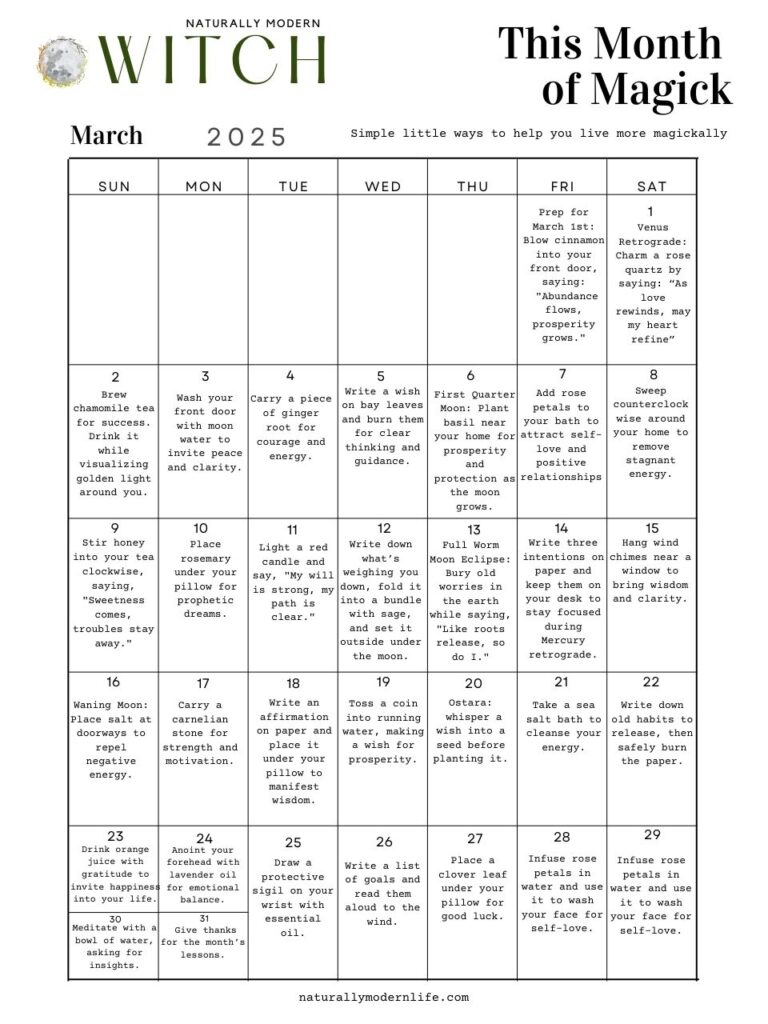
Get the Calendar Each Month
Sign up for our email list and receive the Naturally Modern Witch Calendar in your inbox on the 30th/31st of each month.
Want it Soooner?
Join the Coven on patreon and get the calendar 15 days early so you’re always in sync with the magick ahead!
About the Author
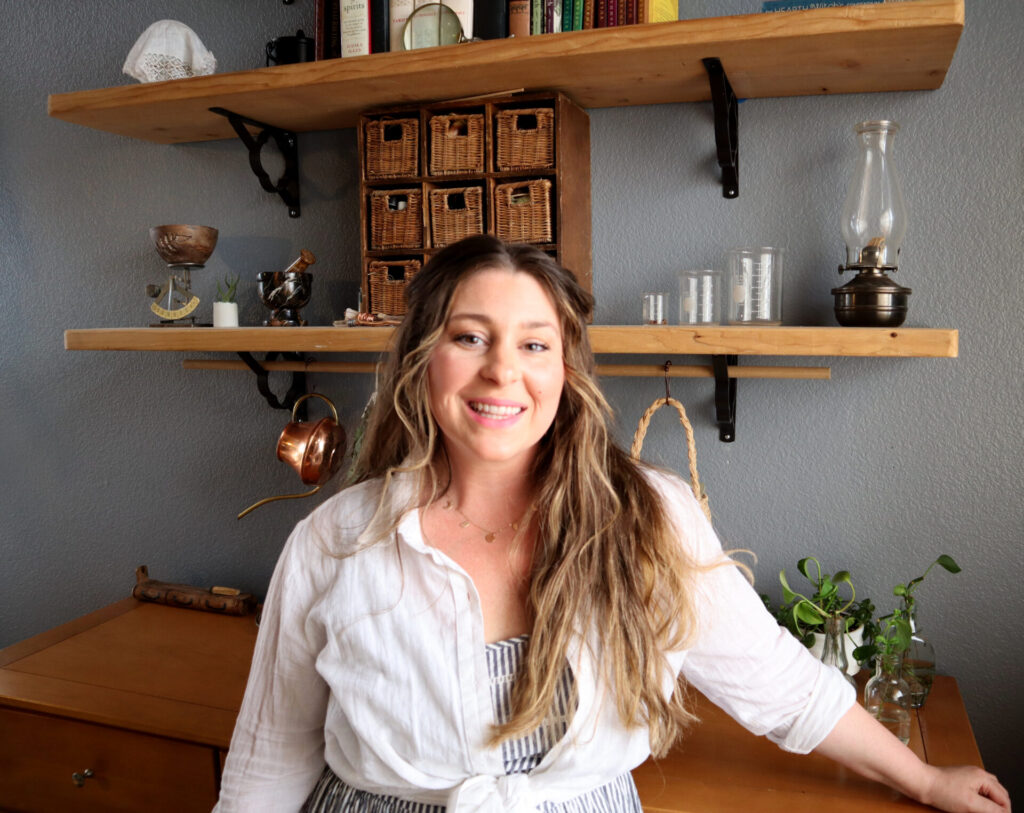
Lacey is a modern witch living by the seasons and the moon. She is dedicated to helping you develop a practice that flows with everyday life. Read more about her