Yule, also known as Midwinter, is a time of pure magick for modern witches.
There’s nothing quite like the stark beauty of a landscape in stillness, or the hush that settles over the woods after snowfall. The familiar becomes enchanted, the ordinary turned to myth. A branch cracking, a bird’s wings overhead, every faint sound echoes with significance. Every dash of color, from a berry’s red to a blue winter sky, becomes sacred.
Here we pause for Midwinter. During this time, we honor the shortest day and the longest night. The earth appears still, almost frozen in time, yet beneath the surface, life prepares quietly for return. Like the new moon, or the Crone in her wisdom, this is a phase of deep rest before renewal.
After the Winter Solstice, the days begin to lengthen. Slowly, the light returns.
Grab the free Naturally Modern Witch Calendar or read The Naturally Modern Witches’ Almanac for December.
The Winter Solstice: The Longest Night
The Winter Solstice occurs on or around December 21, when one of the Earth’s poles tilts farthest from the Sun. For that hemisphere, it marks the shortest day and longest night of the year. At the poles, there is near-continuous twilight or darkness.
This event goes by many names: Midwinter, The Longest Night, Modranicht (Mother’s Night), Alban Arthuan, Mean Geimhridh, Yule, Yuletide, The Wild Hunt, and more. Around the world, similar festivals of light and renewal are observed, including Hanukkah, Kwanzaa, Dongzhi (the Winter Solstice), and Las Posadas.
Yule itself comes from the Old Norse jól and Old English géohol, meaning a midwinter festival that often involved hunting and feasting once the harvest was complete. In time, these customs intertwined with early Christian celebrations, giving rise to the holiday many now know as Christmas.
If you have children, check out Children’s Books for Winter Solstice.


Yule in Ancient and Modern Magick
The myths and festivals of this time are so deeply embedded in human memory that we rarely question why we decorate fir trees, hang evergreen wreaths, or light candles in every window. For thousands of years, people have honored the rebirth of the Sun with light, greenery, and feasting.
The Romans celebrated Saturnalia, beginning December 17 as a week of revelry honoring Saturn, the god of time and agriculture, with sacrifices, feasting, and gift-giving.
In ancient Egypt, the return of Ra, the sun god (or, in some stories, the birth of Horus), was celebrated as a way to thank him for the life-giving warmth he brought.
Santa Claus, or Father Christmas, has roots older than we often realize. Saint Nicholas, a 4th-century bishop, became known for secretly leaving gifts for children, but many folklorists trace this figure further back to Norse and shamanic archetypes such as Odin, who was said to fly through the night sky during the Wild Hunt, bringing wisdom and blessings.
The Yule Log was originally an entire tree, ceremonially chosen and brought indoors. Its largest end was placed in the hearth and lit using the charred remains of the previous year’s log, symbolizing continuity and protection. The log would burn slowly over the twelve days of Yule.
The Celts and Druids of the British Isles also marked Midwinter, though little is recorded about the details. According to Pliny the Elder, Druid priests gathered mistletoe, known as a sacred plant of healing and protection, and honored the changing sun.
In some traditions, Yule retells the battle between the Holly King and the Oak King. The Oak King, representing the newborn light, defeats the old Holly King, who embodies darkness and decline. From this victory, the days begin to grow longer once more.
Others honor Yule as the birth of the Sun Child, or the divine light returning to the world. This echoes myths from many cultures. Some celebrate with candles for the laboring Mother, be she Mary or the Great Goddess, while others light bonfires on hills to call the sun back.
Yule Folklore and Symbolism
In Roman mythology, holly was sacred to Saturn. To honor him during Saturnalia, Romans exchanged holly wreaths as gifts. The practice of “decking the halls” with greenery symbolized life persisting through the dark.
Ivy represented devotion and eternal life. In Greek myth, ivy belonged to Dionysus, the god of revelry and transformation. One tale tells of a maiden who danced herself to death before the god; moved by her passion, Dionysus transformed her spirit into ivy, a plant that forever clings and endures.
The tradition of wassailing (singing and drinking to one another’s health) originated with Anglo-Saxon farmers blessing their orchards in winter. They would pour cider on the roots of fruit trees and sing to awaken fertility for the coming year. Over time, this custom evolved into the caroling we know today.
The Victorians further shaped modern Yule and Christmas traditions. In 1840, Prince Albert introduced the decorated Christmas tree to England, adapting a German custom that may have evolved from the Yule Log. Three years later, Henry Cole commissioned the first printed Christmas card.
Even the feast itself, roasts, puddings, and mince pies, blends ancient and Victorian origins. Early mince pies contained meat, but by the 19th century, fruit and spice versions became fashionable, leading to the sweet treats we enjoy today.
Witchy Ways to Celebrate Yule
Yule marks the turning point and the surrender of the waning year to the waxing one. Starting at sunrise after the solstice, the sun climbs just a little higher and lingers a little longer each day. This return of the light has always been cause for celebration.
Here are ways a modern Green Witch, Kitchen Witch, or House Witch might honor the season:
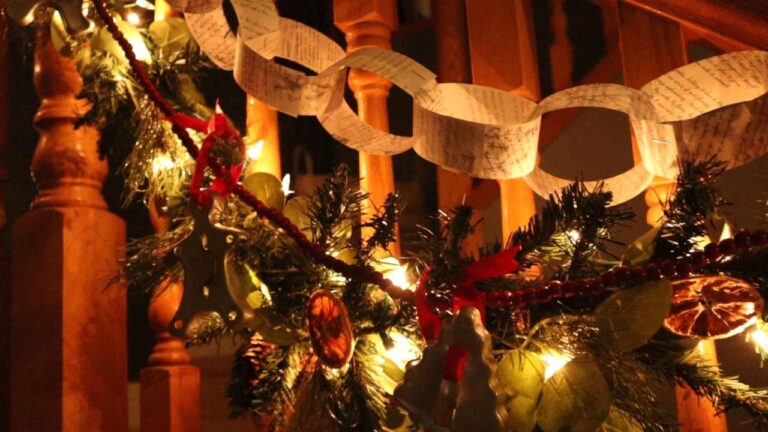
Decorate your home with sacred evergreens: fir, pine, mistletoe, holly, and ivy. Each represents resilience and protection through the dark.
Harvest or purchase a Solstice tree from a sustainable farm. As you decorate, speak blessings of joy, renewal, and gratitude. Or, use the one from last year, since using what you already have is kinder on the earth.
Honor the longest night. Turn off all lights for a moment, sit in darkness, and reflect on rest and peace. When ready, relight candles to welcome the newborn sun.
Burn a Yule Log in your hearth or outdoors. If you can, light it from the remnants of last year’s log or candle to symbolize continuity.
Meditate at sunrise or sunset, observing how the light shifts on the horizon.
Feed the wild ones. String cranberries, popcorn, or seed ornaments for birds and woodland creatures.
Gather for storytelling. Share the tale of the Holly King and Oak King, or any legend of light reborn.
Create a circle of candles to honor the four directions and what they bring into your life. Things like stability, passion, intuition, and clarity.
Host a Spiral Walk. Place candles leading to a central flame. Each participant walks inward, lights a candle from the center, and walks outward again, mirroring the sun’s path at solstice.
Step Into The Circle & Embrace Your Inner Magick
Join the Naturally Modern Witch Coven on Patreon
Develop a practice that flows with everyday life by living with the seasons and the moon.
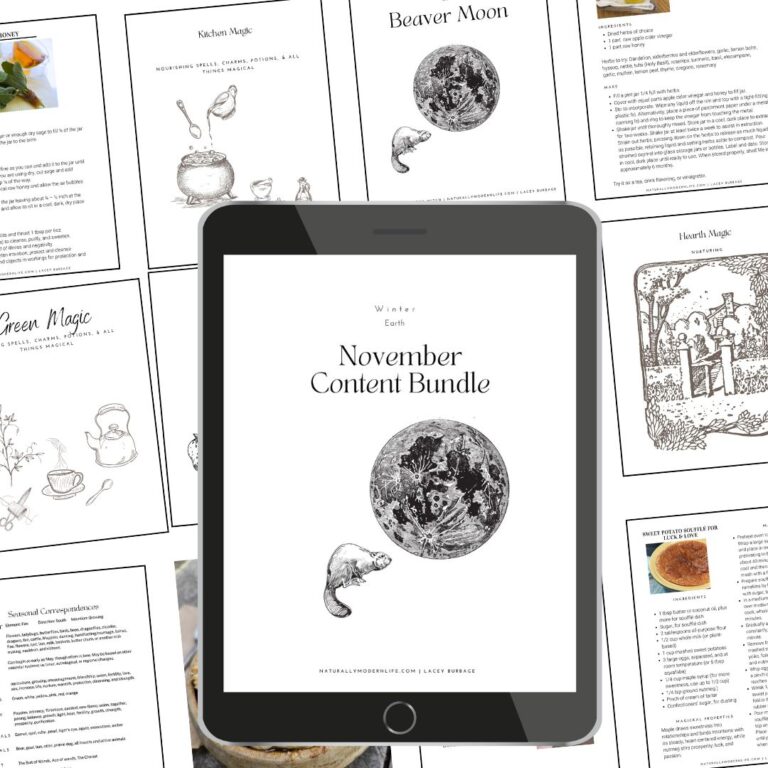
Start living your magick every day with monthly bundles of seasonal spells, moon rituals, cozy witchcraft, and coven connection, perfect for beginners ready to root into rhythm.
Bringing Yule into Everyday Witchcraft
Yule reminds us that stillness is sacred. Rest is part of the natural cycle of renewal. As the sun is reborn, so too can we rekindle what feels dim within ourselves.
If you’d like to live more intentionally with the turning of the seasons, join the Patreon Coven where we celebrate living a witchy life guided by the rhythm of the moon and the earth. Every month, members receive a Content Bundle filled with seasonal spells, kitchen witch recipes, and green witch rituals that flow naturally with life.
For video tutorials and inspiration, visit my YouTube channel to see my 3-part series, witchy ways to celebrate Yule.
And for a deeper practice, explore my course Everyday Witchcraft and Magick, where I teach you to create your own Wheel of the Year based on your region and lifestyle so you can live your witchy life in tune with the cycles that truly surround you.
Blessed be!
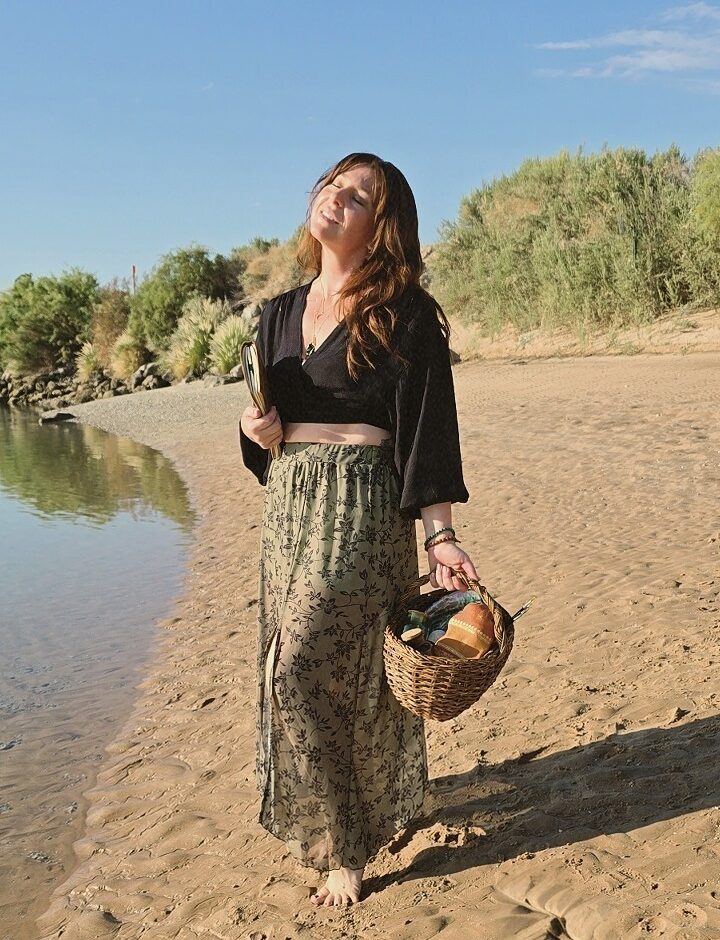
About the Author
Dedicated to helping you develop a practice that flows with everyday life, I’m a modern witch living by the seasons and the moon. Read more about me here