A modern witch’s guide to celebrating the 12 nights of Yule.
Every year when winter deepens, the same questions echo through witchy corners of the internet:
“How do I celebrate the 12 Nights of Yule?”
“When does Yule actually start?”
“Is it the solstice? Is it the full moon after the solstice? Is it twelve nights, thirteen nights?”
And honestly?
Everyone has an answer, and most of them are true.
Because Yule was never one single holiday.
It was a season, a cycle, a turning, and every region, village, and family observed it differently.
So let’s break down the history, the folklore, the modern versions, the WitchTok adaptations, and the version I practice as a Naturally Modern Witch, including the 13-wishes ritual, how I build my vision board, and why my new year doesn’t begin until February 1st.
Wheew! Now, let’s begin.
Where the 12 Nights of Yule Come From
- Historically, Yule or jól is an ancient Germanic, Norse, and Scandinavian midwinter festival. (pre-Christian). Yule was originally a multi-day winter festival. Different regions celebrated anywhere from 3 to 12 nights. The “twelve-night” structure shows up in medieval Germanic and Scandinavian references to Yuletide and the Rauhnächte (“Rough Nights”), a liminal, magical 12-night period.
- Christian Epiphany Tradition (post-Christian overlay). When Christianity spread into Northern Europe, the church placed Christmas (Dec 25) and Epiphany (Jan 6) over the existing Yule period. This gave us the modern “12 Days of Christmas,” which mirrors but does not originate from the older 12-night Yuletide.
In ancient pre-christian times, Yule was:
- a feast season
- a time of communal fires
- offerings to ancestors and gods
- the calling back of the sun
- protection against the cold, dark, and spirits of winter
- and a celebration of the returning light
But here’s the complication:
- Some groups marked Yule by the solar solstice (December 20–22)
- Some by the first full moon after the solstice (This was a common pre-Christian Germanic method.)
- Some simply celebrated it as a winter feast period lasting anywhere from 3-12 nights.
And that’s why every year you see:
- Solstice-based Yule celebrations around Dec 20-22, and
- Lunar-based Yule celebrations about two weeks later
Both are valid.
Both have historical precedent.
There has never been one universal way to “Yule.”

How to Celebrate Yule?
If you want to see exactly how I celebrate Yule or if you’re craving more witchy ideas, rituals, traditions, and modern ways to bring this season to life I’ve gathered a whole collection of resources for you. Click here
You celebrate it by honoring the season through fire, food, warmth, rest, connection, offerings, and reflection.
Across the modern pagan community, I’ve seen celebrations that look like:
- potlucks with lamb, goat, or even alligator
- Christmas-adjacent dinners with multi-cultural dishes
- families burning a straw Yule Goat
- cutting down a fresh evergreen
- decorating with pinecones, dried fruits, and candles
- telling ghost stories
- wassailing (blessing orchards with song)
- reading books by the fire
- leaving offerings at altars
- celebrating Mother’s Night
- honoring the Wild Hunt
- giving gifts
- feasting through the dark nights
Some people burn the Yule Goat because of its Scandinavian roots as Jultomten, a winter spirit who ensured preparations were done well.
Others burn it as symbolic warmth.
Others simply keep it as décor.
There are hundreds of “Yule guides” out there.
Each one reflects a modern interpretation of ancient fragments.
The thread that ties them all together?
Light, warmth, food, family, gratitude, and the slow return of the sun.
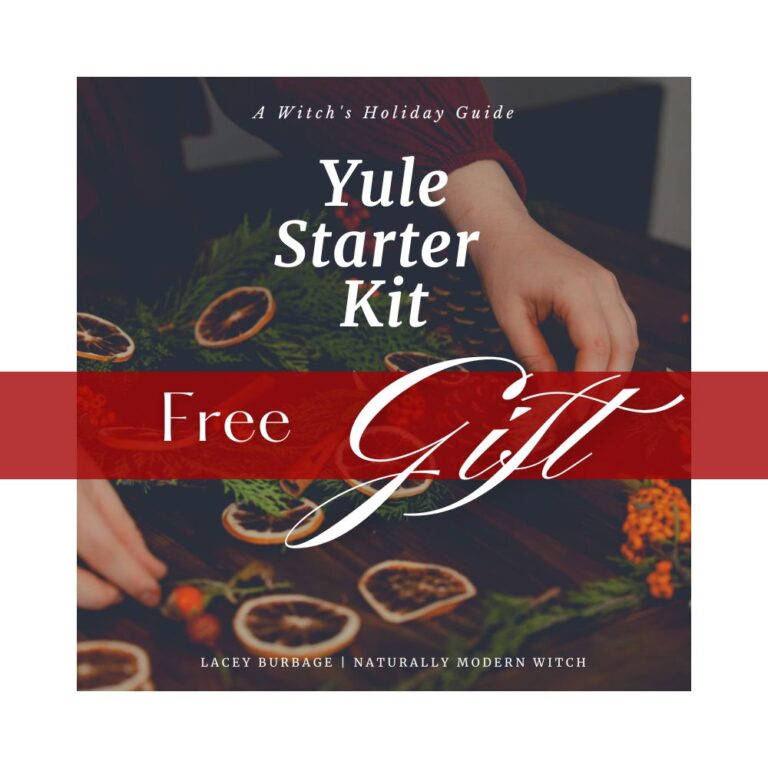
If you’re a beginner trying to learn how to celebrate Yule, grab my free Yule Starter Kit.
12 Days of Yule and the New Year
If you follow the solar version of Yule, the 12 Nights begin the night before the Winter Solstice and carry you straight through to New Year’s Day. Other traditions follow the older Rauhnächte timing, which begins around December 24-25 and ends on January 5-6, but both systems reflect the same midwinter magic.
It seems for the best to follow whichever calls to you. My new year does NOT begin on January 1st. Energetically, I start my year on February 1st, the first spark of spring, the season of planting, tending, and doing the work.
Winter is the season of rest, dreaming, planning, and preparing.
That’s why this ritual is so powerful: it meets the energy of the season, not the pressure of the calendar.
TikTok “12 Magical Nights”
If you’ve been on WitchTok, you’ve probably seen people talking about “The 12 Magical Nights.” Each of the 12 nights represents one month of the calendar year.
This idea actually comes from Rauhnächte, the Alpine and Germanic lore that the twelve nights after the solstice are liminal, divinatory, and spiritually powerful.
- prophetic dreams
- omens
- winter spirits
- ancestral contact
- cleansing
- readings
- offerings
This is why, when you see “The 12 Days of Yule” for modern witches, you’ll see a combination of modern pagan, Rauhnächte, and epiphany blended to make a new topic to honor each of the 12 days. Meaning, you too can create your own traditions and rituals for this time of year.
There are dozens of modern pagan lists for the 12 Nights of Yule.
Some pull from Norse sources, some from Germanic folk tradition, some from Wicca, some from Celtic practices, some from family custom. Here is a list that I like to use:
Night 1: Mother’s Night (Modraniht) Honor feminine ancestors, mother figures, guides, protectors, and the Mother-Maiden-Crone trinity, and laboring mothers.
Night 2: Winter Solstice The longest night. Pause. Reflect. Honor the dark and the light returning.
Night 3: Home + Warmth / Wild Hunt Cleanse the home. Light the hearth. Some observe this as a night to honor ancestors and spirits riding the Wild Hunt.
Night 4: Gratitude / Feast of the Sun Give thanks. Celebrate abundance. Offerings of food, drink, and light.
Night 5: Community Gather with loved ones. Share food. Connect.
Night 6: Joy + Sacred Fire (Often December 25) Celebrate the returning light. Traditionally, this is when people notice the days getting lighter again.
Night 7: Hospitality + Revelation Acts of kindness. Reflect on what truths this year has revealed.
Night 8: Protection + Generosity Refresh home protections. Give freely to others.
Night 9: Divine Connection + Healing Offer to your gods, guides, and higher spirits. Focus on emotional, physical, and spiritual renewal.
Night 10: The Hunt + Blessings Explore nature. Give offerings to the land. Bless your home, deities, and loved ones.
Night 11: Transition Let go of the past. Bless the coming year.
Night 12: Renewal + Abundance Plant symbolic seeds. These are intentions for what’s coming next.
How Epiphany Connects to Yule (History Note)
Some of the January extensions you see in modern pagan lists:
Festival of Lights (Jan 1)
Day of Quiet (Jan 2)
Day of Nature (Jan 3)
Twelfth Night / Wassailing (Jan 4)
Day of Trinity (Jan 5)
Hearth Day (Jan 6)
Pagan 12 Days of Yule lists come from two places:
Medieval Christian Epiphany
January 6 marks the arrival of the Magi, but it also absorbed older midwinter customs, including feasts, fires, gift-giving, house blessings, and wassailing.
Folk survival traditions
Especially in England, Germany, and Scandinavia, many “Christian” Epiphany customs are actually much older pagan practices with new names slapped on top.
Modern pagans often reinterpret these into witchcraft-friendly versions.
12 Magical Nights Ritual
I originally heard of this modern witchcraft ritual inspired by Rauhnächte from creator Vaness.
I combine it with my Plan Like a Witch workshop method and my Intention Casting Board workshop method. Here’s how I do it:
- Solstice Night, write 13 wishes. One wish per paper, written as if already true.
- Fold them up so you can’t see them. And keep an extra copy of the list in a notebook to look back on later.
- For 12 nights, burn one wish, without looking at it each night.
- The final wish is the one I am responsible for making happen. I have a saying: “You can’t sprint in all directions at one time.” So this is the one thing I focus on, no matter what, for the next 12 months. Everything else, I let the Universe handle.
What I do next is very, very important!
Step Into The Circle & Embrace Your Inner Magick
Join the Naturally Modern Witch Coven on Patreon
Develop a practice that flows with everyday life by living with the seasons and the moon.
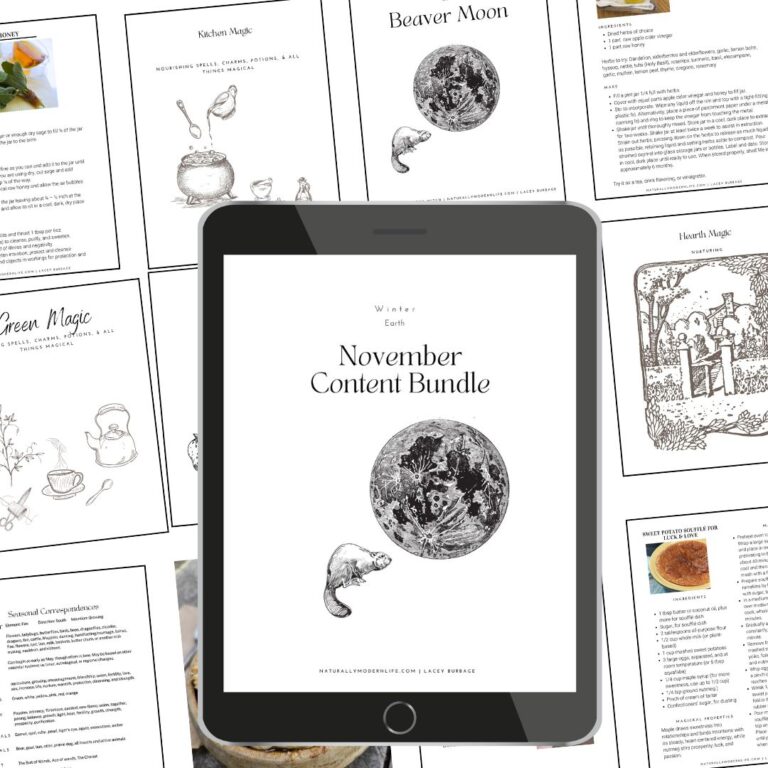
Start living your magick every day with monthly bundles of seasonal spells, moon rituals, cozy witchcraft, and coven connection, perfect for beginners ready to root into rhythm.
Intention Casting Board
From January 1st until the first New Moon of January (this year, January 18th, 2026), I create my Intention Casting Board based on the 13 wishes I wrote down (I told you to keep that extra list).
This isn’t a vision board.
An Intention Casting Board is about calling it in and anchoring it into the rhythms of the year, the 12 Nights of Yule, and the cycles that actually shape your life.
And my wish for you in 2026 is that you reclaim your power and shine with inner illumination.
However you choose to celebrate the 12 Nights of Yule, remember that this season was never about perfection; it was always about light in the darkness, warmth in the cold, and honoring the quiet turning of the year. Take what resonates, make it yours, and let your winter magic unfold one night at a time. Blessed Yule, my friend.
Blessed be,
Lacey
Naturally Modern Witch
About the Author
Dedicated to helping you develop a practice that flows with everyday life, I’m a modern witch living by the seasons and the moon. Read more about me here