
Making Incense to Use in Your Witchcraft Spells and Rituals
Small rituals can create a sense of comfort and belonging, no matter where you are. For many, incense is a cherished part of these rituals. With a rich history spanning ancient civilizations and modern uses in spiritual practices, incense holds the power to evoke deep emotions and memories. Imagine creating your own incense, capturing the essence of a specific moment or place. Here’s a guide on how to make your sticks, cones, or loose incense at home so that you can use them in your witchcraft practice.
Why is Incense Used in Witchcraft?
As a tool in witchcraft, incese serves both practical and symbolic functions.
Incense has been used for thousands of years. From ancient Egypt to Han Dynasty China and Hindu rituals in India. Greece and Rome adopted incense through trade. During the Middle Ages, its use flourished with the association of frankincense and myrrh with the birth of Jesus. Many indigenous tribes also have a rich tradition of using aromatic plants and resins in ceremonies. For centuries incense has been a symbol of spirituality and ritualism.
The word “incense” itself comes from the Latin “incendere,” meaning “to burn.”
Witches may use incense in many different ways. For purification and cleansing, where the smoke carries away impurities and provides spiritual protection. It represents the element of Air (and sometimes Fire) in rituals, aiding in the incorporation of all four elements. Lighting incense sets intentions or invokes specific energies or deities, with scents chosen for specific goals like love or protection. The sensory experience of burning incense creates a sacred, mystical atmosphere that deepens the practitioner’s connection to the ritual. Incense serves as a symbolic offering to deities, spirits, or ancestors, with the rising smoke symbolizing the delivery of prayers and intentions.
Types of Incense Used in Witchcraft
There are a few types of incense most commonly used in witchcraft today:
- Non-combustible Incese: Made of loose, dry herbs, resins, and binders, these are placed on hot charcoal disks or blocks. Some charcoal blocks are self-igniting, meaning they already contain saltpeter and will light fairly quickly and easily. Other charcoals are made of coconut fiber and will be lit over a stove or with a torch lighter. Egyptian Kyophi is a type of non-combustible incense.
- Combustible Incense: A combination of loose, dry herbs, resins, and pyrotechnics (saltpeter, gum Arabic, or makko powder) formed into sticks, cones, spirals, or tablets and burned on an increase holder. This is the type of incense we see most available today.
- Loose Incense: Includes loose, dry herbs and resins. This mixture is combined before being burned on a charcoal block or disk.
Ingredients for Making Your Witchcraft Incense
Herbs
The plants will take center stage in your incense, so don’t be afraid to create an impactful mixture. I prefer a ratio of 20% pungent leaves and flowers, 50% mellow leaves and flowers, and 30% woods, roots, or spices, but feel free to experiment and find a blend you like best. Here are some suggestions:
- Pungent leaves and flowers: Things like sage, mugwort, yarrow leaves, juniper berries, rosemary, and thyme.
- Mellow leaves and flowers: Plants like rose petals, lavender, yarrow flowers, and fir needles.
- Woods, Roots, and Spices: Angelica root, evergreen, sandalwood, mesquite, wild cherry, applewood, cedar, allspice, cinnamon, cardamom, cloves, and fennel seed.
Plants to Avoid
It’s crucial to exercise caution and awareness when handling or interacting with these plants due to their potential toxicity. Ensure you triple-check every plant used if you are unfamiliar with it.
Boxwood, foxglove, jimsonweed, yew, azelia, hemlock, rhododendron, lily-of-the-valley, mistletoe, monkshood, oleander, wormwood, poison ivy, poison sumac, poison oak, belladonna, bittersweet, tomato leaves, eggplant leaves, bell pepper leaves, and other nightshades, narcissus, daffodil.
Resin
The resin adds a lot of fragrance to your incense blend, so take this into account. This is the fragrant sap from a tree that has hardened. When using resins like frankincense or myrrh, look for sustainable and ethical sources. I prefer to gather resin from local conifer trees where the sap has naturally hardened and fallen to the base. To make it brittle and easy to crush, freeze it for a few hours.
Binder
When making non-combustible incense, you use a binder to act as the glue to hold it all together. Often, the mixture is rolled into a ball, with popular options including honey, water, dried fruit soaked in wine or juice, gum arabic, and gum tragacanth. Use just enough to create a stable dough.
Pyrotechnics
Some plants contain natural compounds that help your incense to burn smoothly. Common pyrotechnics used in incense making are makko powder, saltpeter, gum arabic, Artemisia tridentata, marshmallow root, mullein, and dried citrus peel.
Essential Oil
Synthetic fragrances and essential oils can be used for making incense at home. I prefer to use essential oils as they provide the true energetic benefits of green magick. Adding oils to the mixture can help to boost the aroma of the dry herbs. Bergamot, lavender, jasmine, ylang-ylang, grapefruit, and orange are all oils that work well in incense blends.
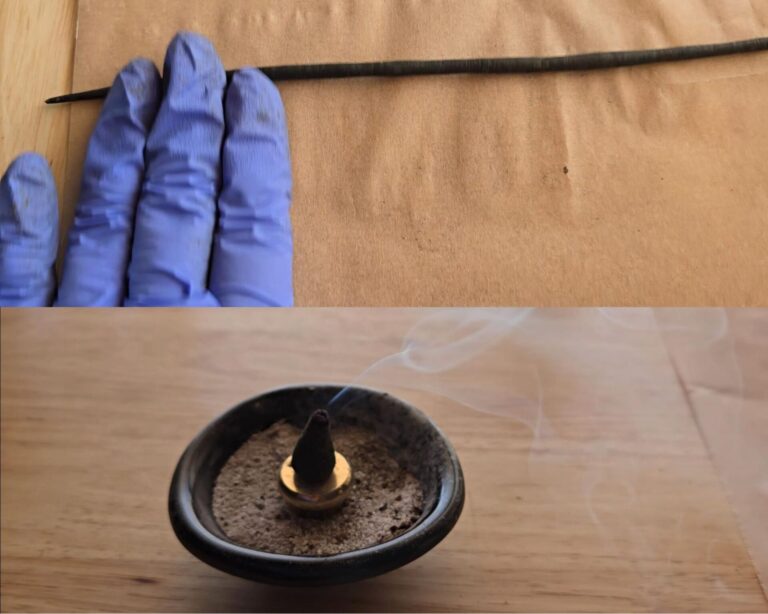
Instructions for Making Incense to Use in Your Witchcraft Practice
- Dry and grind your chosen herbs in an electric coffee grinder or other method.
- With a small amount of the dried herb mixture still in the coffee grinder, add the frozen resin and crush it with the herbs. If using citrus peel, grind that after the resin to help clean your grinder.
- If you’re making combustible incense, combine 3 parts of the herb and resin mixture with 1 part pyrotechnic ingredient. For example, use 3 tablespoons of the herb mixture for every 1 tablespoon of makko powder.
- Gradually add your binder (honey, water, or soaked dried fruit) until the mixture forms a stable dough.
- If using essential oils, you can work about 20 drops into the mixture, adjusting as needed.
- Roll the dough into small cones, balls, or sticks. Allow them to dry completely for a few days before use.
- Always practice fire safety when burning incense and remember it’s hot, so protect your surfaces.
Recipes for Incense to Use in Your Witchcraft Spells and Rituals
Forest Calm
– Dried fir needles
– Dried pine needles
– Dried cedar leaves
– Dried rosemary and pine resin
Floral Bliss
– Dried rose petals
– Dried jasmine flowers
– Dried chamomile
– Dried hibiscus and pine resin
Spiced Comfort
– Dried cinnamon bark
– Dried clove buds
– Dried ginger root
– Dried orange peel and pine resin
Herbal Harmony
– Dried sage
– Dried thyme
– Dried yarrow leaf
– Dried lavender and pine resin
Step Into The Circle & Embrace Your Inner Magick

Develop a practice that flows with everyday life by living with the seasons and the moon. Join the Naturally Modern Witch Coven now.

About the Author
Lacey is a modern witch living by the seasons and the moon. She is dedicated to helping you develop a practice that flows with everyday life. Read more about her here.
The guide on making incense for witchcraft on Naturally Modern Life is absolutely fantastic! Your detailed steps and the thoughtful explanation of each ingredient’s significance make this an invaluable resource for anyone interested in deepening their practice. Thank you for sharing your knowledge and passion with such clarity and enthusiasm. Your work is truly appreciated! Keep inspiring us with your wonderful posts!
Thank you for your kind words!